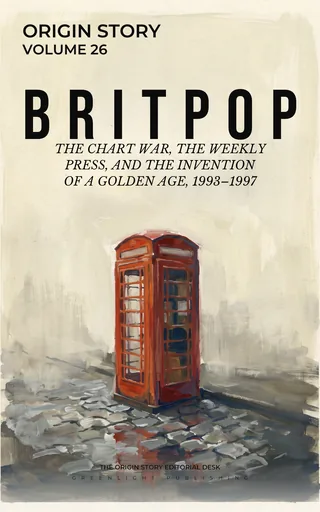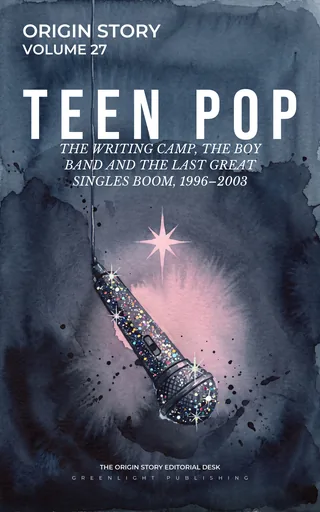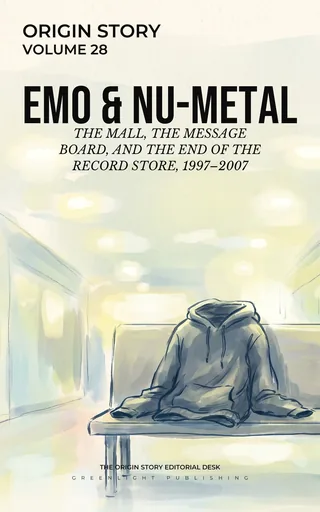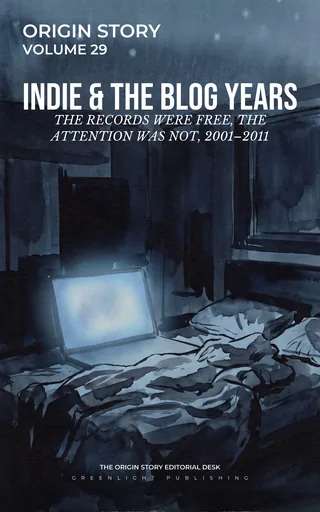
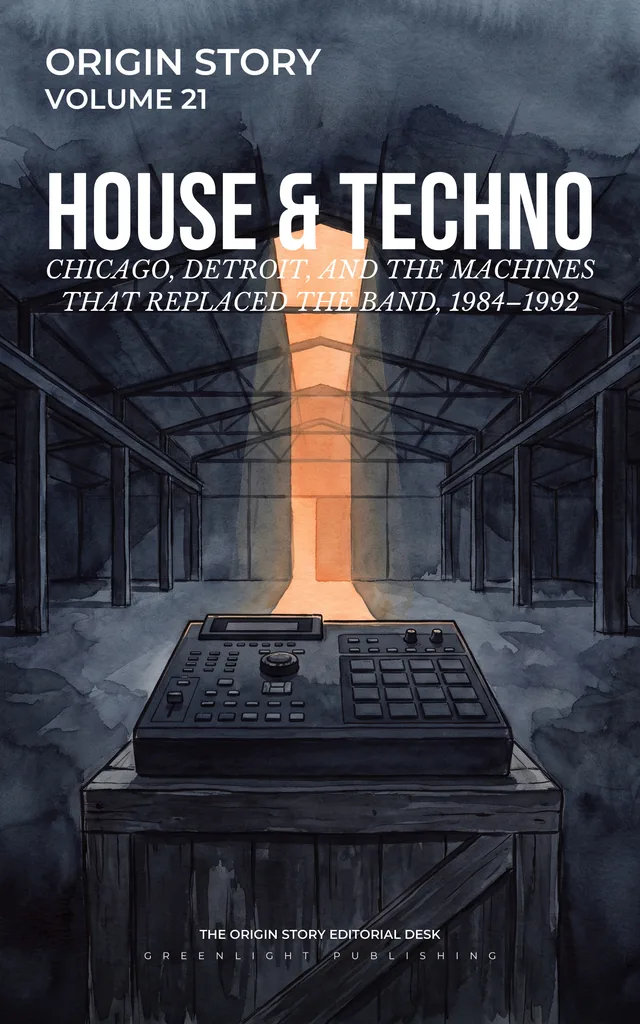
 01
01The Room
The scene, and the city where it ignited. Who was actually in the room, which is rarely who the story remembers.
A history of popular music / 31 volumes
Somebody gets paid. Then it ends.
The records. The machines. The people who changed everything. The complete life of one genre in every volume.
One genre at a time. In about three hours.
Three places to drop the needle
1917thirty-one genres, one century2020s
The chronology · 1917 to the 2020s
They overlap, and the overlaps are the argument. Disco and punk are the same five years, and disco is the parent of both punk and house — which is why these are numbered by ignition rather than by publication. One bar is one book: the years that genre ran, from its first record to its last. The colour follows the same century — gold in the twenties, vermilion through the fifties, cool by the time anybody says the word streaming.
 Volume 17 · 1974–1980PUNKEighteen Months That Rewired the Record Business, 1974–1980
The shape of every volume
Each movement is a different lens, so no two volumes read alike. Movement Five is the one that matters most: it does not summarise, it names what the next volume picks up. That is what turns thirty-one separate books into one history.
01The scene, and the city where it ignited. Who was actually in the room, which is rarely who the story remembers.
 02
02The technology that made it possible and would not have ten years earlier. A photocopier, a drum machine, a twelve-inch single.
 03
03Six to ten records in the order they arrived, described rather than quoted — including the ones the canon dropped, and three that failed.
 04
04Who owned the publishing, what the contracts did, who got paid and who did not. The richest seam in the subject and the least written about.
 05
05What exhausted it, and what it turned into. This is the movement that makes thirty-one separate books into one history.
The house rule
Lyrics are owned. Licensing them is negotiated song by song, publisher by publisher, territory by territory, and the US Copyright Office says plainly that there is no safe word count — no specific number of words, lines, pages. A book that quotes “a little” is a book making a legal judgement it cannot check.
So these quote none. A rule of zero is the only one a machine can verify, and every manuscript, EPUB and narration script in the series is checked against it before it ships.
What replaces the lyric is the harder and more interesting thing: what the record actually sounds like, what it cost, who played on it, and who was paid. Titles are free — and in most pop songs the most quotable phrase is the title.
What a music book usually does
Prints the famous line, in italics, on its own. Adds that popular music was never the same. Charges you for a sentence you already knew and a quotation somebody else owns.
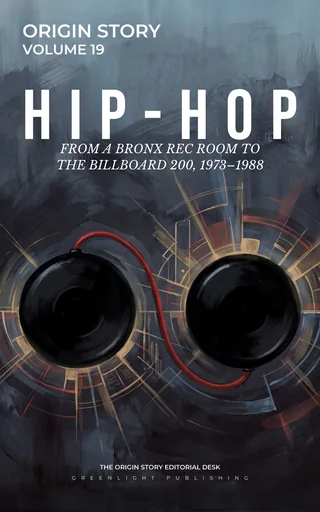
What volume 19 does instead
“A house band was put in a room and told to play the bassline from Chic’s Good Times — not to copy the recording, but to perform it, over and over, for fifteen minutes, because in 1979 nobody had any idea what the legal shape of borrowing a record even was. What you hear on the single is therefore a re-enactment: the same figure, the same tempo, a slightly stiffer wrist.”
And there is a playlist
Every volume has a public playlist, sequenced to the order the records appear in the chapters. This one is called ORIGIN STORY: Hip-Hop. The book cannot play you a record. It can point at one.
Free to read
The parts of these books that answer a question rather than tell a story are worth more in the open than behind a price, so they are all here: every timeline, every source list, the opening of every volume, and the money chapters. Read them, quote them, cite them. The books are what is left.
926 dated entries from 1907 to 2024, merged from all thirty-one volumes and sorted: the first jazz record, the Bristol sessions, the recording ban, Comiskey Park, the 808, the lawsuits, the streaming era. Each one attributed to the volume it came from.
ReferenceThe money21 mechanisms of the record business — the advance, the publishing, the manager’s twenty per cent, the split sheet, sample clearance, the 360, what a stream actually pays — each answered in full by the chapter that explains it, not by a summary of it.
On every volume pageThe openingsEach of the thirty-one pages carries the opening of that volume’s introduction, its full chapter list, its complete timeline and its complete source list — 307 sourcing notes across the series, naming the books, the archives and the court records each volume was built from.
The shop
One genre each, from the first record to the last. Or take a run of three that hand off to each other — which is the way the series is meant to be read.